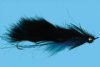
Larimer’s Loop Leech — Black/Blue,
The Loop Leech is also commonly viewed as a straightforward, dependable pattern that produces across seasons—including summer and winter fish—and it has a track record on regional rivers such as the Clackamas and Klickitat.
"As spring arrives on our rivers, so do the first summer steelhead on the Sandy and Clackamas Rivers. The steelhead fishing in April and May can be outstanding on both of these rivers. The water temperatures are rising making fresh fish extremely aggressive. Plus, the rivers are un-crowded. With new leaves on the trees and the smell of spring in the air, it’s a great time to be on the water. " - Tom Larimer
Tom Larimer is a great fly tier and an excellent fisherman. His Loop Leech is a simple, yet effective pattern that catches summer and winter fish. From the Clackamas to the Klickitat, this fly gets the attention of big fish.
More on the loop leach and TomA lot of what Tom Larimer fishes are personal variations you won’t always find hanging on a standard retail peg, but there are a few commercially available patterns that capture the same “gets-noticed” intent. His Loop Leech is one of the most accessible tied commercially through
Solitude and it remains a strong, reliable option for anglers who want a proven leech profile with added trigger.
Larimer’s core idea with the Loop Leech was building a fly that stays visible and relevant as light and conditions change, which is why he leaned so heavily on flash, often around a simple purple or black leech silhouette, sometimes in an egg-sucking style with a bright head, finished with a concentrated bundle of flash to make the fly show itself. He also found that flash preference can shift through the season: brighter flash tends to excel earlier, while darker tones become more consistent as days shorten and light drops, with copper and bronze emerging as late-season standouts.
On the presentation side, he favored fishing the leech in a way that shows a broadside profile and can swing faster, especially in warmer water because, in his view, the biggest trigger is the moment the fly transitions from a freer drift into tension, creating a distinct change in attitude and speed that, paired with movement and flash, makes fish notice and commit. Along the same lines, Larimer has also called out Scott Howell’s trigger-style patterns as consistent producers and notes that Aqua Flies has created a lineup of flies that flat-out fish; even if fewer anglers run flash as aggressively as he did, there are still commercially tied patterns in this category that perform extremely well.
Note: All flies and lures sold on this page are artificial fishing tackle. We do not sell live bait or live animals.
Gear that works, advice that matters.






 Larimer's Loop Leec...