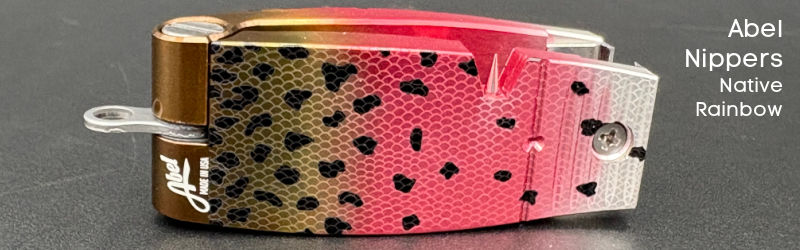
Nipper Guide | Updated 2026
The short version - A good pair of nippers is one of those tools you touch all day without thinking about it. When they are sharp, comfortable, and easy to handle with cold hands or wet fingers, you re-tie more, lose less time, and fish cleaner. When they are not, you notice every single cut.
Our 2026 update focuses on the three nipper brands we see anglers gravitate toward for real, day-in and day-out use: Abel, Simms, and Dr. Slick.
How to Choose Fly Fishing Nippers that cut clean, carry well, and last.
Quick picks
- Fish a lot, want premium feel and longevity: Abel
- Want replaceable cutters and value: Dr. Slick Cyclone
- Want compact premium with strong grip: Simms
- Want simplest, cheapest, dependable: Dr. Slick Traditional
- - If you fish cold weather a lot: prioritize grip and handling first
What matters when choosing nippers
- Cut performance (mono/fluoro first, braid second)
- Grip/ergonomics (cold hands, gloves, wet fingers)
- Serviceability (replaceable cutters vs replace the tool)
- Carry system (lanyard, zinger, pack strap, boat use)
- Extra tools (eye cleaner, threader, split shot crimp)
Explore our full line of Fly Fishing Nippers
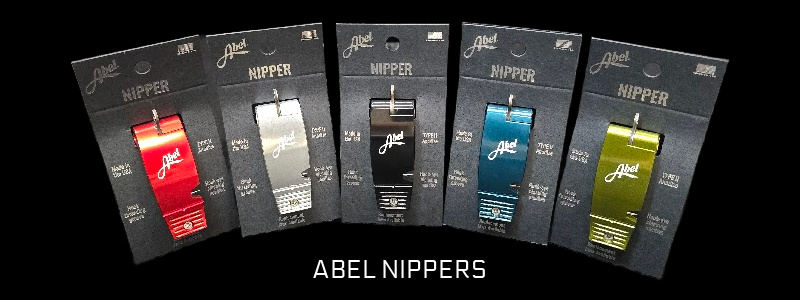
Abel Nippers: the "this feels right" option
Abel's latest nipper generation brings the two things I care about most: ergonomics and confidence in the cut. The first impression is the feel in-hand. Not heavy, but substantial. That extra mass gives you more purchase when you are cutting heavier mono or fluorocarbon, and it makes the tool easier to control when your hands are cold or you are moving fast.
The shape and machining near the jaws also matter more than people expect. It is the difference between fine and "I like using this tool" If you fish a lot, comfort becomes a feature.
The eye cleaner got smarter
The eye cleaners on this version of Abel nippers are straight, fine-pointed, and actually useful. Clearing head cement is easy, and the needle is fine enough for small hooks. The nice touch is that there is an eye cleaner on both arms, so no matter how the nipper is oriented, you can poke and go without flipping it around.
Easy-to-miss feature: the magnetic threader
If you do not read the packaging closely, you could walk right past this. The magnetic fly threader is subtle, not bulky, and it works. The groove channels tippet well, and the magnet helps keep the fly steady so you are not chasing it around with wet fingers.
Pick Abel Nippers: If you want one premium tool you will keep for years, start here.
What stands out in real use
- Ergonomics and leverage: The wider handles and substantial feel make it easier to get a clean cut when you are rushing a re-tie or dealing with heavier mono and fluoro.
- Refined machining: Edges, corners, and contact points feel finished, which matters when a tool lives in your hand all day.
- Two-sided functionality: With an eye cleaner and magnetic threader accessible regardless of orientation, you spend less time fumbling and more time fishing.
- Build mindset: Abel nippers are the "buy once, cry once" category. They are designed like a piece of gear you plan to use for years, not replace every season.
Best for
Anglers who fish a lot, appreciate premium machining, and want a daily-use tool that feels good every time you pick it up.
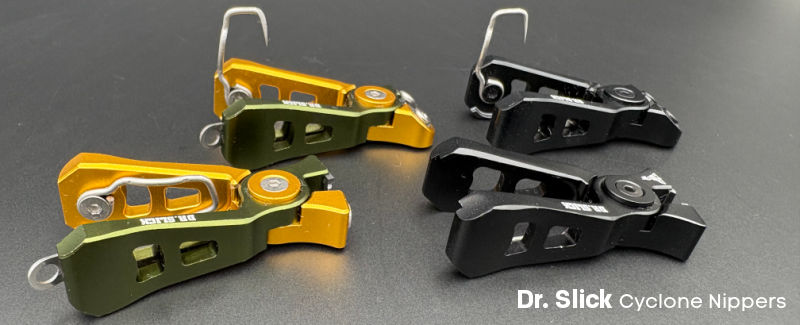
Dr. Slick Cyclone Nippers: practical, fishable value
The Cyclone has earned a spot because it checks boxes that matter in real use. The standout feature is that it ships with replaceable cutters and the hardware to swap them. That is a big deal if you hate throwing away a tool just because the cutting edge is finally tired.
In shop use, they have been better than expected. They cut clean, feel solid, and the replaceable cutter setup is the kind of detail that makes sense for anglers who fish hard. If you are the person who always has backup parts, or you simply want a nipper that is easier to keep alive for the long haul, this is a smart lane.
Pick Dr. Slick Cyclone Nippers: If you cut a lot and hate replacing tools, this is the practical win.â€
What stands out in real use
- Replaceable cutters: The big win is serviceability. When the cutters finally dull, you are not throwing away the whole tool.
- Smart included parts: Having the screws, hex key, and retention ring in the package is the kind of detail that shows this was built for actual anglers, not just a display case.
- Versatility: They handle common shop and river tasks well, including backing and braid, and they do it without feeling fragile.
- Value lane: They are a practical choice when you want performance and durability, but you also want to keep the cost-to-use ratio reasonable.
Best for
Anglers who fish frequently, want a nipper that is easy to maintain, and like the idea of replacing wear parts instead of replacing the tool.
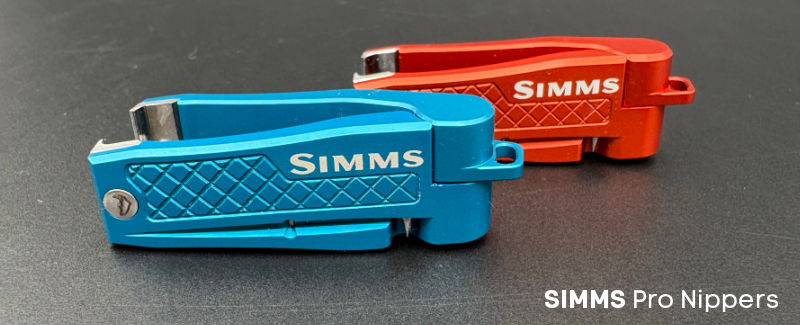
Simms Nippers: premium feel without the fuss
Simms nippers have developed into a strong option for anglers who want a clean, compact tool that feels purpose-built. Where Simms tends to do well is in the day-to-day details: grip, handling, and a design that sits nicely on a lanyard without feeling clunky.
They also tend to include the quality-of-life features people actually use, like a usable eye cleaner and a threader that helps when your fingers are not cooperating. If you like a streamlined tool that is easy to carry and quick to deploy, Simms belongs on your short list.
Pick Simms Pro Nippers: If you want compact carry with good grip, this is the clean choice.
What stands out in real use
- Compact carry and quick access: Simms nippers tend to ride well on a lanyard or pack strap and stay out of the way until you need them.
- Grip in wet conditions: The grip surfaces are designed to be usable with cold hands, wet hands, or gloves, which is when most tools start feeling slippery.
- Practical features: Built-in "use it, not gimmick" features like a hook-eye cleaner and threader are aimed at common on-water problems, especially when you are swapping flies often.
- Good middle ground: Premium feel and fishable design, without forcing you into the highest price tier.
Best for
Anglers who want a streamlined, purpose-built nipper that carries easily, feels secure in hand, and solves common rigging tasks quickly.
Dr. Slick Traditional Nippers (Minimalist pick)
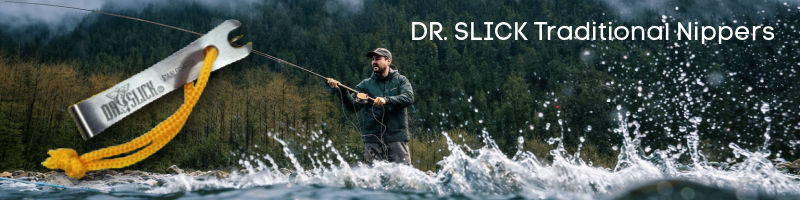
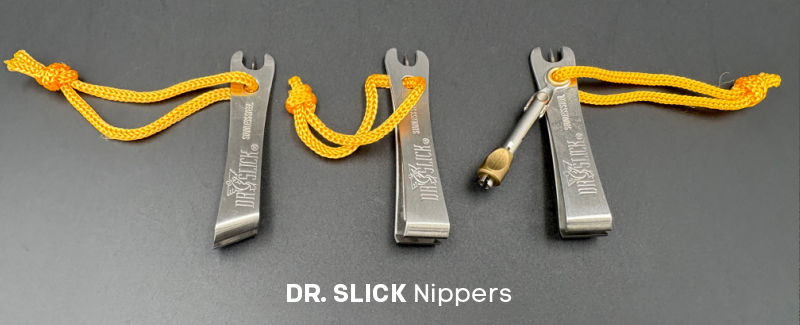
For the true minimalist, Dr. Slick Traditional Nippers are the no-fuss option that just gets the job done. They are light, simple, and easy to live with, clip them on and forget about them until it is time to cut tippet. No extra features, no bulky shape, just a clean, dependable cutter that makes sense for anglers who would rather spend money on flies and time on the water than on a "tool upgrade".
- Eye buster for those small flies that always seem to be glued over the hook eyelet
- Staff Note: If you lose nippers often, or want a backup pair that always lives in the truck, these are perfect.
Pick Traditional: If you want cheap, simple, dependable, done.
Lanyards and attachment: the unglamorous part that matters
A lot of "lost my nippers" stories are not about the nippers. They are about the attachment point, the ring, the cord, or where it is clipped. Whatever brand you choose, make sure the connection is simple, secure, and easy to reach with one hand. If it is annoying, you will stop using it, and that is when gear disappears.
Explore our full line of lanyards
Do they cut, and do they cut clean?
For standard nylon and fluorocarbon tippet, all three options handle the job. Where things get more revealing is heavier mono, stiffer fluorocarbon, and braided materials. Braid can be tricky for most cutters, and technique matters. A controlled cut, with the line placed correctly against the cutting edge, makes a bigger difference than most people want to admit.
- Most nippers will cut braid, but it is rarely a ‘clean snip’ unless the fibers are under tension.
- If you routinely cut backing/braid, choose a model that handles it well and expect braid to cut cleaner with tension.
- Maintenance Note: wipe/rinse, avoid salt corrosion, do not cut wire, store dry. This reduces"my nippers don't cut anymore" issues.
Final thoughtsIf you want the most refined feel and a tool that you will genuinely enjoy using, Abel is tough to beat. If you want a hardworking option with the practical benefit of replaceable cutters, the Dr. Slick Cyclone is a strong choice. If you want a clean, compact premium tool that carries well and does the basics right, Simms makes sense. And if you are a true minimalist who just wants a simple, reliable cutter with zero fuss, the Dr. Slick Traditional Nippers are an easy pick. Shop Fly Fishing Nippers
Q&A
Do nippers cut braid/backing well?
They can, but braid and backing are tougher to cut cleanly than mono or fluoro. Most nippers do best when the braid is pulled tight and placed firmly into the cutting edge, instead of trying to snip loose, limp braid. If you regularly cut backing or braid, prioritize a model known for strong cutters and good leverage, and expect technique to matter more than it does with tippet.
Do I need a threader?
No, but it is one of those features that becomes valuable when conditions are not ideal. If you fish small flies, wear gloves, deal with cold hands, or simply want faster re-rigging, a built-in threader is genuinely useful. If you mainly fish larger flies and bigger tippet, you can skip it without feeling like you are missing out.
How do I keep hook eyes clear without breaking hooks?
Use the eye cleaner as a pick not a pry bar. Stabilize the fly, then push straight through the eye with light pressure. If the eye is fully glued shut, soften the blockage first by scraping the surface or cracking it gently, then clear it with the needle. With small hooks, avoid twisting or levering sideways, that is when hook eyes bend or the needle snaps.
When should I replace nippers or cutters?
Short answer: when they crush instead of cut, leave burrs, or require repeated snips.
Brand pages: Abel - Dr. Slick - Simms
Still not sure which nippers fit your fishing? Call the shop and we’ll point you to the right pair.
Shop Fly Fishing Nippers





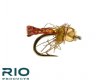 Little Thing - Rust
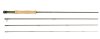 Scott Session Fly Rods