A Simple Trout Spey Rod Weight Guide (1-5wt) and How to Choose
Understand Trout Spey rod weights at a glance so you can choose the lightest rod that still handles your water and flies with confidence.
Trout Spey went from specialty to mainstream fast, and the gear evolved just as quickly. Rods, lines, and setups have become more purpose-built, which is great for performance, but it can be confusing when you are trying to pick the right rod weight for the way you actually fish. This guide keeps it simple: what each Trout Spey weight is best at, what it struggles with, and why anglers end up owning certain sizes.
One key concept before you buy: A Trout Spey "weight" does not behave like a single-hand line weight. With two-handed systems, the match is driven more by the mass of the head (grain weight) and how the system is designed to cast. That is why two anglers can both fish a 3wt Trout Spey and still use very different heads depending on the rod, the casting style, and the flies they are turning over.
The three things that should drive your choice
Before you think about the number printed on the blank, think about:
- Fly size and weight: Wets and soft hackles fish differently than weighted streamers.
- Depth - How deep?: Shallow swings favor lighter systems. Deeper swings usually call for more mass and more control.
- Water+ wind: Small water and calm days suit lighter rods; big water and wind favor
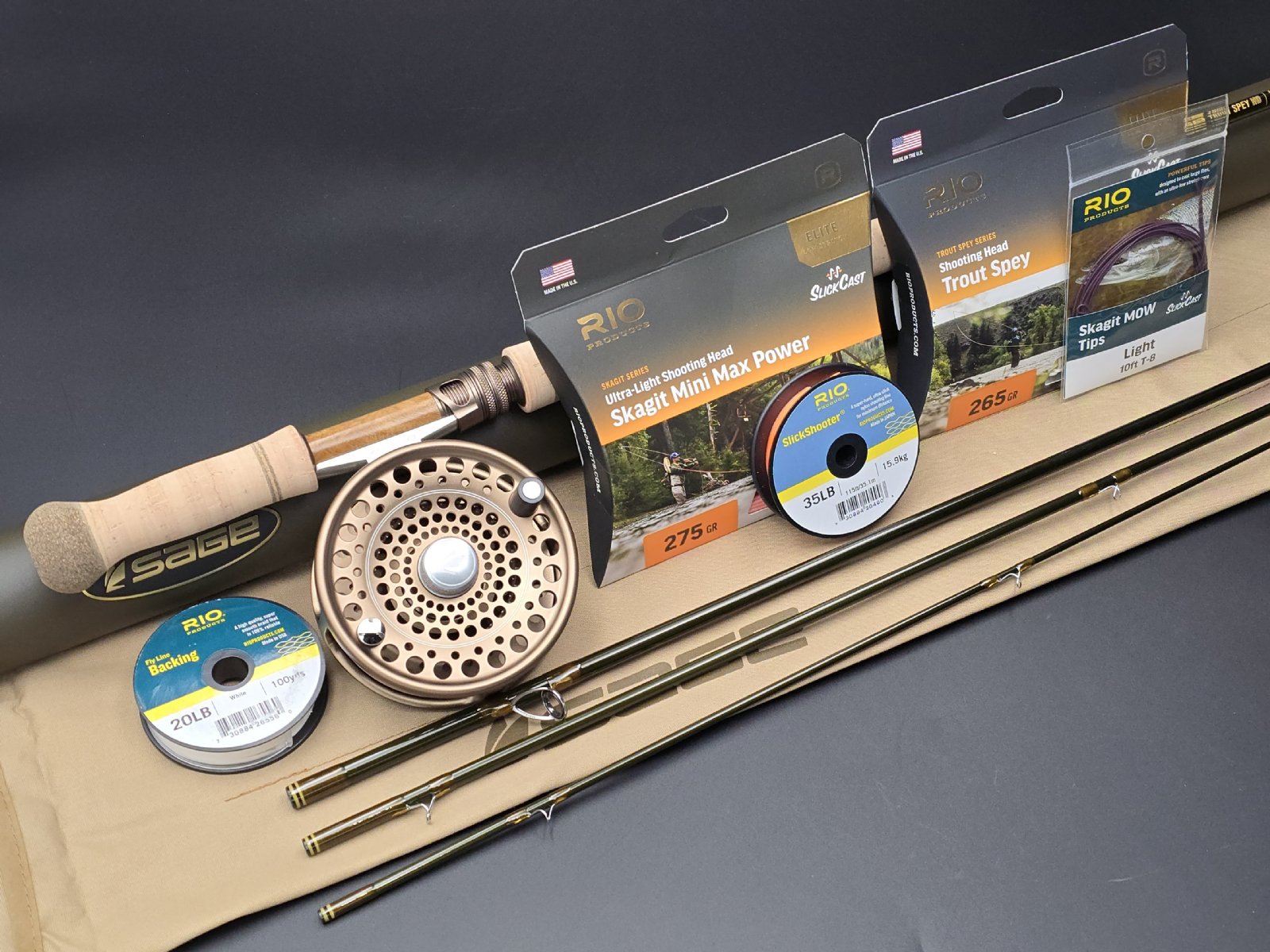
You will also hear anglers talk about Scandi-style and Skagit-style Trout Spey systems. In simple terms, Scandi setups tend to favor cleaner, touch-oriented presentations with lighter flies, while Skagit setups are typically chosen when you want to turn over heavier flies and fish deeper more often.
Choosing the Right Weight
1 Weight Trout Spey
Yes, 1-weights are a real thing, and they are a blast in the right lane. Think of a 1-weight as the ultralight end of Trout Spey: it excels with unweighted wet flies, soft hackles, and smaller traditional patterns where you want maximum feel and a gentle presentation. It can handle a light sinking leader and a small streamer, but it is not built for pushing heavy flies or fighting wind all day.
Best for: finesse swinging, light flies, calm conditions, smaller water
Not ideal for: heavy flies, strong wind, consistent deep fishing
2 Weight Trout Spey
A 2-weight keeps the finesse feel but adds noticeable capability. It is still excellent for light wets, yet it has more authority with small weighted streamers and a broader range of sinking leaders. The extra power also helps maintain loop stability when conditions get less friendly, especially when a breeze comes up or the river is moving faster.
Best for: wets plus small streamers, mixed conditions, medium water
Not ideal for: consistently heavy rigs or truly big-water demands
3 Weight Trout Spey
If you only buy one Trout Spey rod, a 3-weight is the safest, most useful choice. The jump from a 2 to a 3 is significant, and it is the weight that covers the widest range of real-world trout swinging. A 3-weight can comfortably fish many weighted flies within reason, handle longer sinking leaders, and keep its composure when you need more control in heavier flows.
It also hits a sweet spot when fighting fish. You get enough backbone to pressure a strong trout without losing the fun and feel that makes Trout Spey addictive in the first place.
Best for: the one-rod Trout Spey setup, broadest versatility
Why it is popular: capability without giving up finesse
4 Weight Trout Spey
4-weights are where Trout Spey starts leaning purpose-built. They are not automatically more versatile. They are more appropriate when your normal program involves bigger water, heavier flies, and deeper, more demanding swings. A 4-weight can make tough conditions easier and can be a better tool when wind and flow are constant factors.
Best for: big rivers, heavier flies, deeper swings, tougher conditions
Tradeoff: less delicate feel for light flies and smaller water
5 Weight Trout Spey
A 5-weight is the heavy end of Trout Spey and is best when you are intentionally fishing the most demanding trout applications. Think large profiles, rougher conditions, and consistently deep presentations. For some anglers, a 5-weight also functions as a crossover tool when trout water starts looking a lot like light steelhead water in terms of flow and space.
Best for: maximum capability, big water, heavy work
Tradeoff: often too much for classic light-wet Trout Spey days
How to think about head length and grain weight
Once you have a rod weight in mind, the next step is choosing a head that matches how you want the rod to feel and what you need it to do.
Head length
Head length influences timing, anchor size, and how much space you need to cast.
Shorter heads feel quick and compact. They are easier to manage in tight quarters and they tend to turn over heavier flies more easily. They also make it easier to load the rod with less line out.
Longer heads feel smoother and more carry-oriented. They reward clean technique, often land softer, and can feel more stable when you are making longer swings and covering broad water. They usually require a bit more room and more consistent timing.
A simple way to choose:
- If you fish smaller rivers, brushy banks, or make lots of short to medium casts, start shorter.
- If you fish more open runs and like longer carries and smoother tempo, go longer.
Grain weight
Grain weight is the mass of the head, and it largely determines how deep the rod loads and how much energy is available to turn over a fly.
Too light and the rod can feel underloaded, especially when the wind comes up or you are trying to cast anything with weight or air resistance. Too heavy and the rod can feel sluggish, with timing that collapses and loops that get wide.
A practical approach:
- Start in the middle of the rod's recommended grain window if you want a balanced, do-everything feel.
- Go lighter if you are primarily fishing unweighted flies and want a crisper, more touch-oriented presentation.
- Go heavier if you are turning over larger, heavier flies and you want the rod to load with less line out.
Scandi vs Skagit in one sentence
Scandi-style heads generally favor lighter flies and cleaner presentations, while Skagit-style heads generally favor heavier flies and more depth control. Both can work on the same rod if you choose the right head length and grain weight for your fishing.
Quick shortcut: which one should you buy?
- Primarily unweighted wets and soft hackles: 1 to 2wt
- Want one rod to cover most trout swinging: 3wt
- Regularly fishing bigger water and heavier flies: 4wt
- Heaviest trout applications and toughest conditions: 5wt
Trusted tackle, honest guidance, faster time fishing. Don't like talking on the phone? Shoot us an email.








 RIO Premier Midge T...